
- JP
- EN
LNG and Ethane Carrier Business
Outline of Services
Aiming at Stable Transport of Emerging Clean Energy Resources
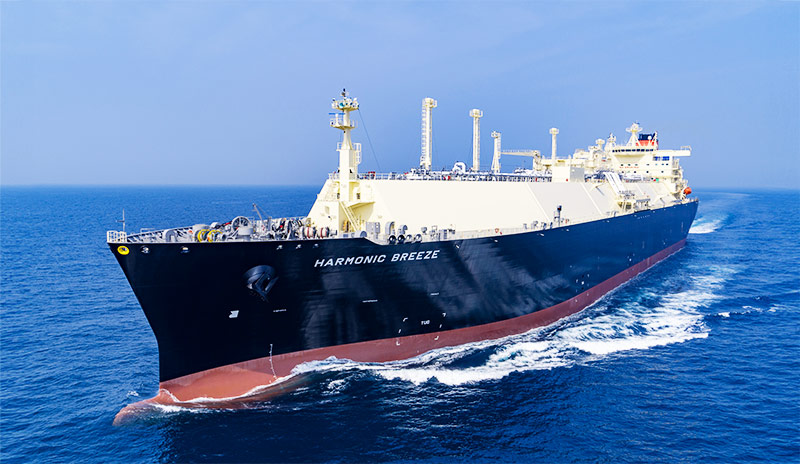
Demand for liquefied natural gas (LNG) has been increasing as an environmentally friendly, clean energy source. MOL has accumulated considerable expertise in this field since 1983, when we first participated in LNG transport, and is proud to be in the forefront of LNG carrier ownership, management, and operation.
MOL manages its LNG carriers through a global ship management network including in Tokyo, London, Singapore and Jakarta, , maintaining safe operation with advanced transportation technologies and highly skilled personnel.
In 2016, building upon our extensive experience and know-how acquired in both the LNG carrier and LPG carrier fields, MOL began operating the world's first very large ethane carrier (VLEC) through a strategic partnership with Reliance Industries Limited in India.
Subsequently, MOL signed long-term charter contracts with SCG Chemicals, a wholly owned subsidiary of the Siam Cement Group (SCG), a leading integrated chemical player in ASEAN, in 2025, and with Oil and Natural Gas Corporation (ONGC) of India in 2026. Through these contracts, MOL's VLEC fleet is expanding to 16 vessels, making it the largest VLEC fleet in the world.
Pioneering a New Era of LNG Transportation with Wind Power
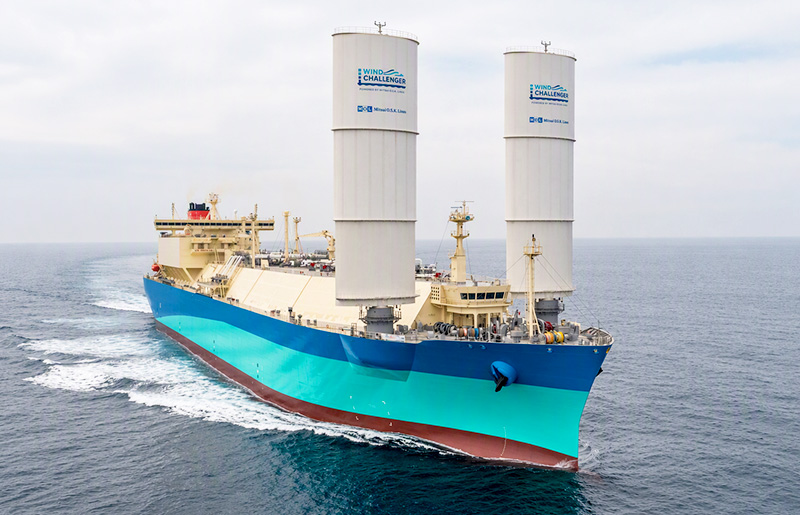
MOL is committed not only to safe and efficient transportation, but also to improving fuel efficiency and environmental performance.
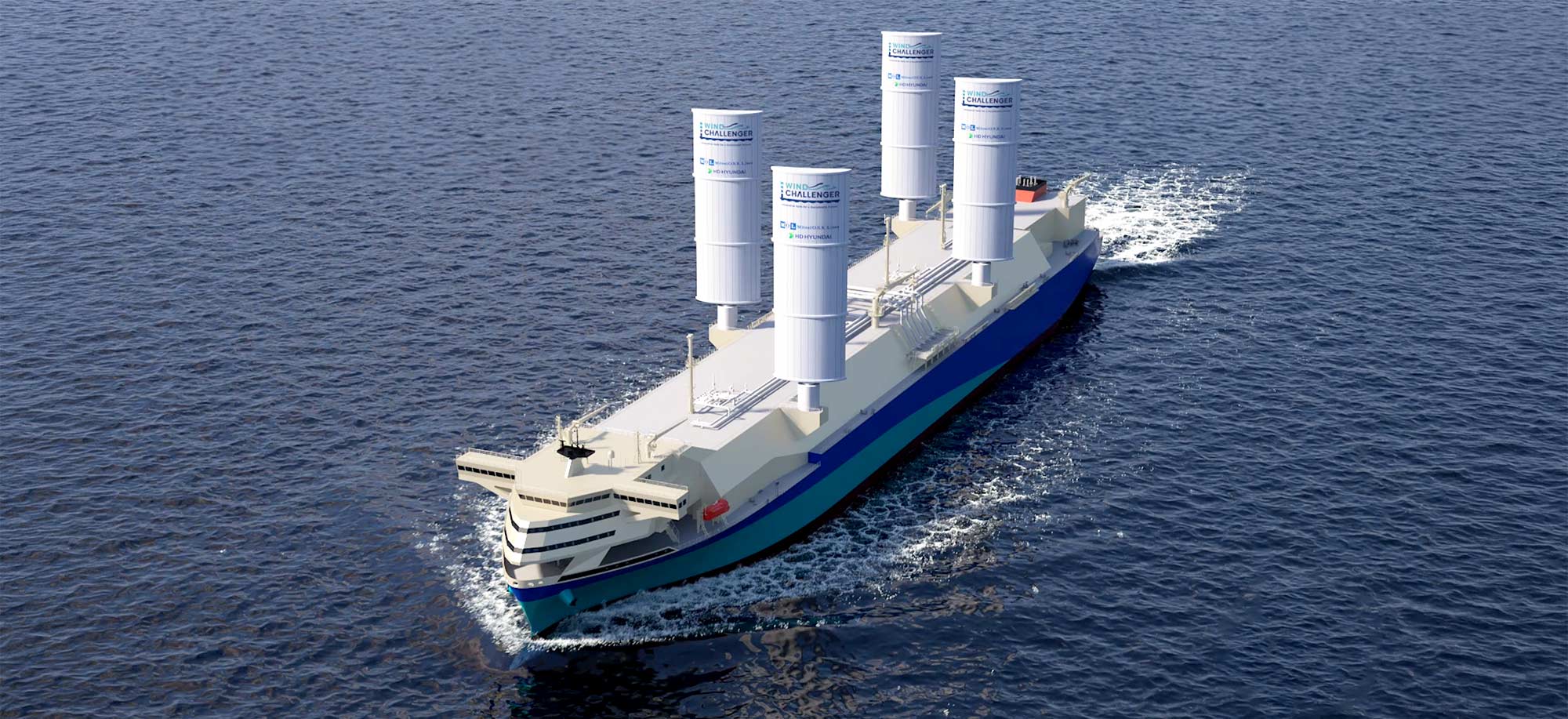
As part of these efforts, an LNG carrier equipped with two units of Wind Challenger, a hard sail wind-assisted ship propulsion system developed by MOL, is scheduled for delivery in September 2026. This vessel will mark the world's first LNG carrier equipped with wind-assisted ship propulsion systems.
Furthermore, in September 2025, MOL obtained Approvals in Principle (AiP) for new membrane-type LNG carrier equipped with four units of Wind Challenger from Lloyd's Register, as well as from the Marshall Islands and Liberia, two major flag states. These new design vessels are expected to maximize the benefits of wind-assisted propulsion through optimized sail arrangements and enhanced fuel efficiency.
Wind Challenger is an innovative wind-assisted propulsion system that utilizes automatically controlled telescopic hard sails to efficiently harness wind energy and convert it into propulsive force. By reducing fuel consumption and greenhouse gas (GHG) emissions, the system contributes to decarbonization of maritime transportation while maintaining safe and reliable operations.
By utilizing wind-assisted propulsion technologies such as Wind Challenger, MOL aims to further enhance LNG transportation and create new value for customers and society.
To meet the growing demand for LNG and ethane transportation, MOL continually contributes to realization of a cleaner and more sustainable society through both safe, reliable ocean transportation services and initiatives to reduce environmental impact.

- Dry Bulker Business
- Carbon Solutions Business
- Tanker Business
- LNG and Ethane Carrier Business
- LNG Infrastructure Business
- Offshore Business
- Offshore Wind Power Energy Business
- Chemical Logistics Business
- Containership Business
- Car Carrier Business
- Terminal Business
- Logistics Business
- Real Property Business
- Ferry and Coastal RoRo Vessel Business
- Cruise Business
- Tugboat Business
- Maritime Consulting
- Global HR consulting business