
- JP
- EN
Human Capital Development
- Our Approach to Human Capital Development
- MOL's ideal employee profile
- Pillars of Human Capital Development
Our Approach to Human Capital Development
We aim to simultaneously foster the growth of our employees, support the sustainable development of the MOL Group, and create value for society through human capital development.
Under the MOL Group Human Capital Vision, we are guided by three core principles—Diversity, Equity & Inclusion, Mutually Empowered, and Highly Engaged. Based on these principles, we are creating an environment in which diverse talent can envision their own career aspirations, continually challenge and inspire one another, and take ownership of their professional growth.
The Company supports employees' ongoing development by providing opportunities for learning and new challenges, as well as a wide range of development programs. At the same time, each employee is expected to learn proactively, take initiative, and collaborate with others.
Through this mutual commitment, individuals and the organization strengthen one another, enabling the MOL Group to remain agile, resilient, and capable of leading the way in an era of rapid change.
MOL's ideal employee profile
The ideal profile MOL seeks to develop under the MOL Group Corporate Mission is "independent-spirited personnel" who create new values. Such personnel contribute to solving social challenges and driving the sustainable growth of the Company by collaborating with diverse colleagues, continuously developing themselves through proactive engagement in their work, and creating new value with a global perspective.
"Independent-spirited personnel" are people who always act with a sense of ownership even when faced with difficult challenges. They identify solutions, collaborate with stakeholders, and take the initiative to put those solutions into practice. They also proactively shape their own careers through continuous learning, growth, and purposeful action.
| Characteristics of Independent-Spirited Personnel | Characteristics of Dependent personnel | |
|---|---|---|
| Take ownership and act proactively. | Approach to Work | Wait for direction and act reactively. |
| Drive improvements and pursue results. | Way of Working | Focus only on assigned tasks. |
| Take initiative to solve problems and engage stakeholders. | Response to Challenges | Expect others to resolve problems. |
| Continuously learn and embrace change. | Commitment to Self-Development | Show limited initiative in learning and adapting. |
| Take responsibility for shaping their own careers. | Ownership of Career Development | Depend on others to provide career opportunities. |
| Contribute to team success and support others' growth. | Approach to Organizational Contribution | Prioritize personal interests over collective success. |
Core Competencies and Mindsets
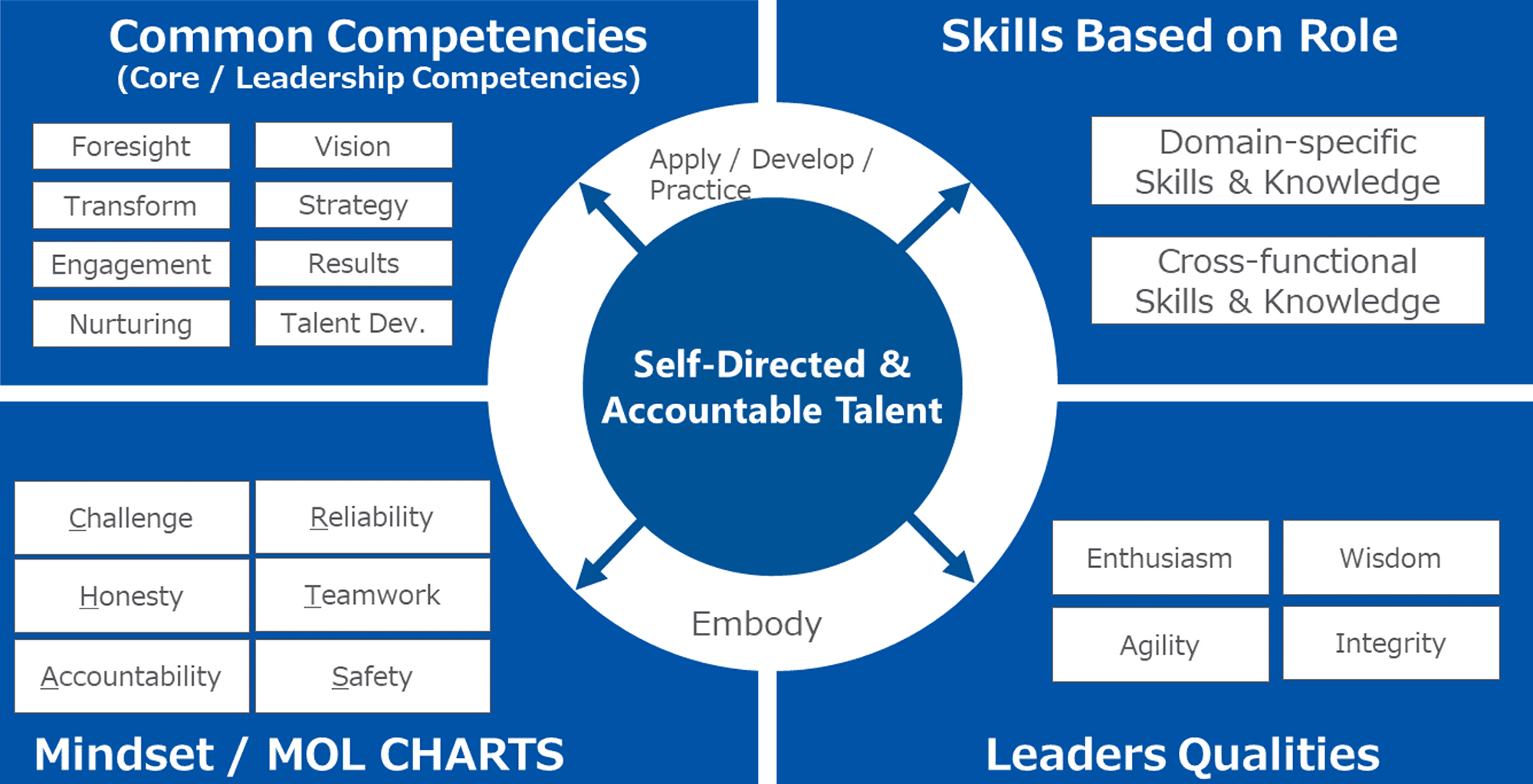
Targets/KPIs/Action Plans
The MOL Group has identified sustainability issues to be prioritized through its business activities and has established goals, KPIs, and action plans for human capital development under "Human Capital," one of these key sustainability issues.
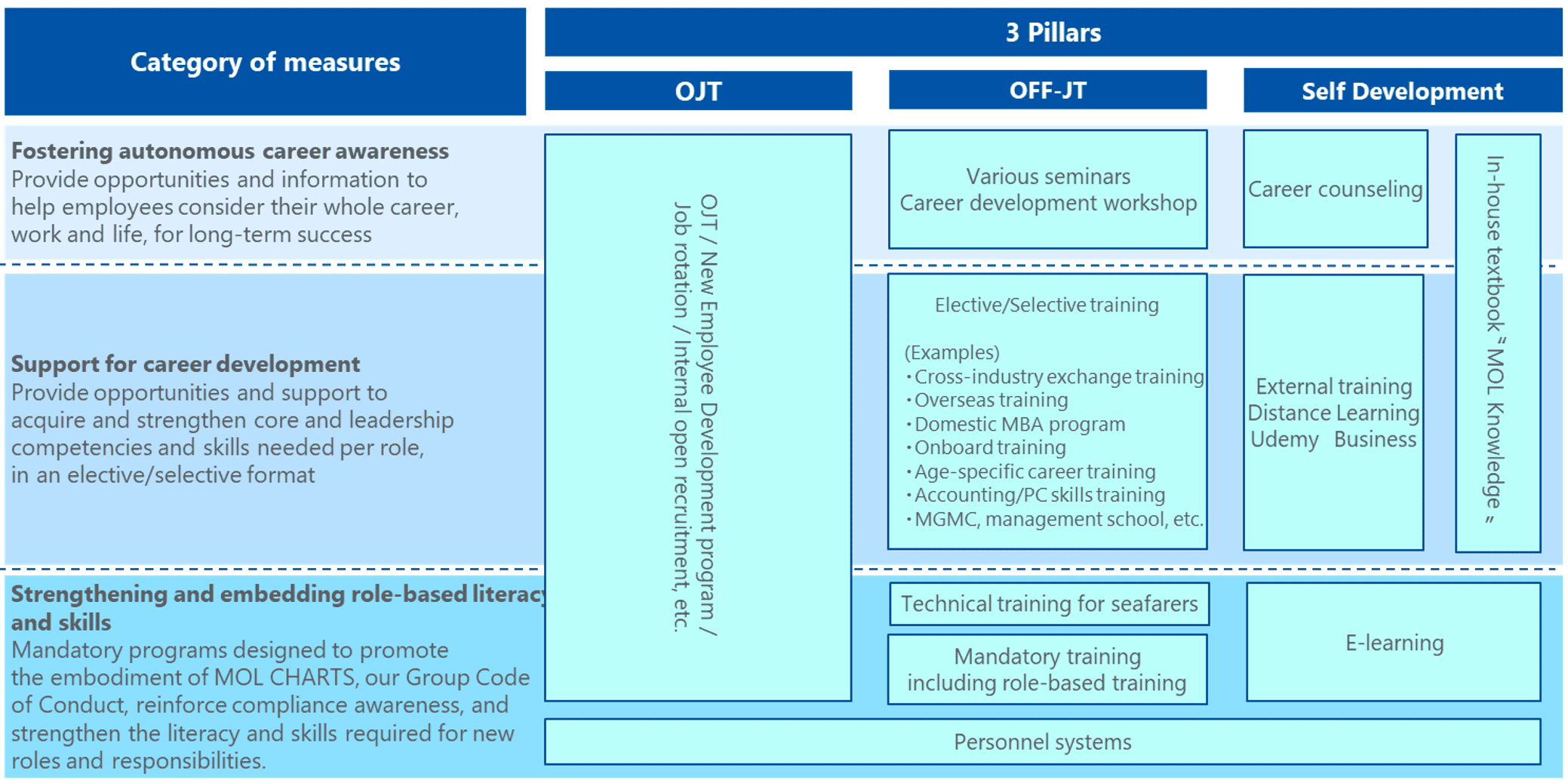
Pillars of Human Capital Development
Our human capital development framework is built on three pillars: On-the-Job Training (OJT), Off-the-Job Training (Off-JT), and Self-Development.
Across each pillar, we provide a broad range of programs and opportunities that foster self-directed career ownership, support career development, and enhance the literacy and skills required at each stage of an employee's career.
Through these initiatives, we empower every employee to achieve continuous growth and maximize their potential.
Trainer system (targeting new graduates)
During their first year with the Company, each new employee is supported by a designated trainer who provides ongoing guidance and assistance. Through this program, new employees develop the fundamental mindset expected of working professionals, as well as the knowledge and skills required to understand our business and perform their roles effectively.
Regular one-on-one meetings are also conducted to establish step-by-step development goals and review progress and challenges at each stage. This structured approach supports the steady growth and development of every new employee.
* Trainers are typically experienced employees in shore-based workplaces and Chief Officers or First Engineers in shipboard workplaces. In collaboration with surrounding team members, they provide practical on-the-job training and support. In addition, Team Managers (shore-based workplaces) and Captains or Chief Engineers (shipboard workplaces) monitor and support the development of new employees while also fostering the growth of the trainers themselves.
Mentor System (targeting mid-career recruitment)
We provide a mentor system to support the smooth integration of mid-career employees into the workplace and help them build internal networks. In addition to regular one-on-one meetings with mentors, we offer comprehensive support from the perspectives of work, career development, health, and networking. This support includes one-on-one meetings with the Human Capital Management Division and each HR Business Partners (HRBPs), health consultations conducted by the Health Administration Center, and opportunities for employees to connect and build relationships across the Company.
* To ensure a comfortable environment in which employees can openly seek advice, mentors are generally assigned from a different team than the employee they support. Whenever possible, mentors are selected from a related business area to help employees adapt to the workplace, expand their internal networks, and gain a deeper understanding of their work and the organization.
Job Rotation (for new employees)
Over a period of approximately ten years from joining as new graduates through their early careers, shore-based employees experience at least three different roles or departments through job rotation (*). By accumulating a wide range of experience, they develop a broad perspective and multifaceted viewpoints, while identifying their own preferences and aptitudes to build their careers autonomously.
* As a general policy, employees are expected to experience multiple divisions among the corporate, business, and regional divisions.
Mid-career hires also undergo job rotation, taking into account the experience and expertise they have cultivated prior to joining the Company, in order to give concrete shape to their careers. (However, this does not necessarily apply to specialized professionals who are expected to acquire and demonstrate their expertise at an earlier stage.)
For seagoing employees, the period from Third Officer/Third Engineer to Chief Officer/First Engineer is positioned as a time to intensively develop experience and skills through sea service, while also acquiring the common competencies and mindset required across both sea and shore (MOL CHARTS). By concentrating on sea service for a certain period after joining the Company, they aim to achieve early proficiency as seafarers and, as captains and chief engineers with solid seamanship, to play active roles in the departments to which they are assigned based on the principle of the right person in the right place, including shore-based positions.
Because concentrating on their duties at sea is a prerequisite, some training programs that affect vessel assignment—such as those held over extended periods—are not available to them. However, online training and short-term courses that can be taken during periods other than boarding are, in principle, available. To acquire and further develop the common competencies and mindset required across both sea and shore (MOL CHARTS), we encourage them to make use of training programs to the extent possible, in accordance with each individual's career and circumstances.
Personnel System (Remuneration and Performance Appraisal System)
Basic Policy
The Company introduced a new personnel system in fiscal year 2025 based on the following two fundamental principles:
- Human capital allocation with the right people in the right place, and realize a remuneration system based on contributions and outcomes
-
- We will assign diverse individuals to appropriate positions and establish a fair remuneration system based on contributions and results. We will promote the recruitment and engagement of human capital at the global level through human capital exchanges with domestic and overseas group companies and external organizations.
- Each employee is required to break away from the seniority-based mindset and contribute to the organization through continuous learning and growth, while recognizing and encouraging each other.
- Acquiring a high level of expertise that meets global standards
-
- We continuously improve expertise in existing fields and appropriately incorporate advanced expertise in new fields and aim to build an organization in which a group of experts with specific expertise and a group of generalists active in a wide range of fields coexist and collaborate. We will define and visualize the necessary human capitals and utilize them in personnel planning and personnel measures.
- Each and every employee is required to discover and develop their strengths and expertise, and take on the challenge of creating new value, while taking the initiative in their own careers.
Remuneration System
We have revised the traditional seniority-based grade and salary-step system and introduced a hybrid grading and remuneration system that combines a Job Grade, based on the weight of the assigned job and position, and a Competency Grade, based on competencies and demonstrated behaviors.
Rather than assigning employees based on age, we aim to place talent in the right positions according to their abilities and organizational needs, while providing remuneration that appropriately reflects their contributions and performance.
Performance Appraisal System
Under the new personnel system, we redefined the objectives of the performance appraisal system as the following five key purposes: embedding the organizational culture, strategy execution, human capital development, Right person in the right place, and determination of remuneration.
Through dialogue, feedback, and career development discussions between managers and employees, including career interviews, we aim to support the growth and development of each individual.
Performance data
Training programs for selected employees
Our selective leadership development programs aim to prepare the next generation of executives and leaders by broadening their perspectives, enhancing their strategic mindset, and strengthening their ability to realize a vision and drive organizational success.
MOL Global Management College
Mitsui O.S.K. Lines Group has implemented MGMC (MOL Global Management College) program since 2014 to develop future global leaders.
As a leadership development program for global talent across the Group who are expected to play key roles in leading MOL Group in the future, MGMC was restructured into two programs in 2025: "MGMC Growth" and "MGMC Onboard".
Aiming to foster leadership that drives the Group's growth, these programs are designed to help participants deepen their understanding of the Group's businesses, build network with diverse participants, acquire management perspectives, and strengthen their decision-making and strategic thinking capabilities.
Participants are also given opportunities to discuss the Group's challenges and future directions and make individual presentations to management.
These programs have been highly valued by participants and have received positive feedback.
| FY2021 | FY2022 | FY2023 | FY2024 | FY2025 | FY2014 ~cumulative total |
|---|---|---|---|---|---|
| 14 | 8 | 20 | 17 | 38 | 181 |


MOL Management School
Established in 2010, MOL Management School is an in-house leadership development program designed to cultivate next-generation leaders who stay attuned to global trends and pursue overall optimization from a medium- to long-term perspective. The program has been conducted annually since its launch.
The first half of the six-month program features lectures by outside instructors with the following themes: "People and Organization," "Management Strategy," "Accounting," and "Digital Transformation (DX)."
In the latter half, under the theme of "Dialogue with Management," we invite internal and external executives to share the essentials of leadership based on their real-life experiences.
In the final session of FY 2025, the participants made presentations to executives, instructors, and their superiors on the following themes -"What kind of leader do you want to be in three to five years? and What will you do to achieve this?"- based on what they had learned throughout the program.
| FY2021 | FY2022 | FY2023 | FY2024 | FY2025 | FY2014 ~cumulative total |
|---|---|---|---|---|---|
| 9 | 9 | 11 | 16 | 15 | 159 |
- Sustainability TOP
- Message from the Chief Sustainability Officer
- Sustainability
Management - Value Creation
Stories - Environment
- Safety
- Human Capital
- Digital Transformation
- Governance
- Social Contribution
Activities - Stakeholder
Engagement - Sustainable Finance
- Sustainability Data
- ESG Disclosure
Guideline Indexes - External Recognition
- Library