
- JP
- EN
August 26, 2026
MOL Selected to Exhibit at COP31 Japan Pavilion
- Showcasing Next-generation Efficiency-enhancing Technologies Powered by Wind, Data and AI -
Mitsui O.S.K. Lines, Ltd. (MOL; President & CEO: Jotaro Tamura, Headquarters: Minato-ku, Tokyo) has been selected as an exhibitor for the Japan Pavilion, organized by Japan's Ministry of the Environment, at the 31st session of the Conference of the Parties (COP31) to the United Nations Framework Convention on Climate Change, to be held in Antalya, Türkiye, in November.
This year, MOL will showcase the Wind Challenger, a next-generation hard-sail wind-assisted propulsion system, and the Digital Approach to Reduce GHG with Integrated Network (DarWIN) (Note 1), a project aimed at realizing more efficient vessel operations through the implementation of fuel efficiency improvement measures and voyage optimization support tools. By presenting these operational efficiency technologies that leverage wind power together with data and AI where appropriate, MOL will share its initiatives with a global audience.
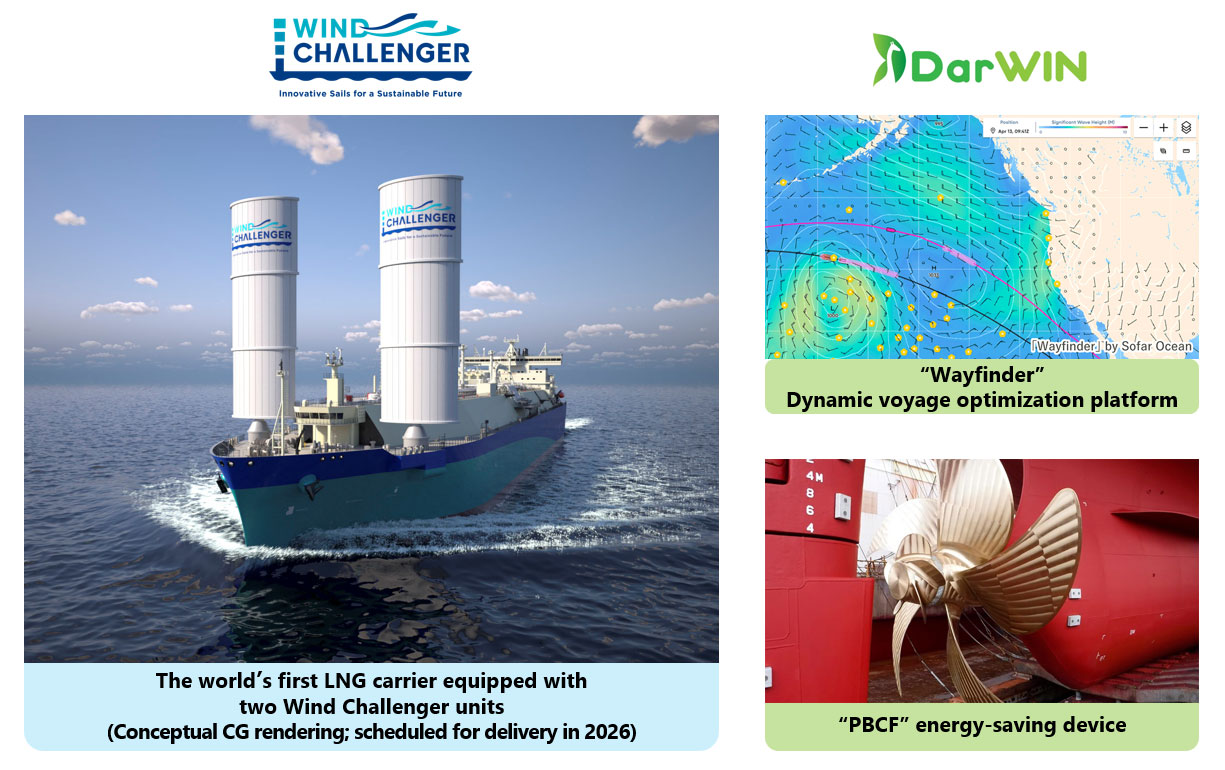
The Conference of the Parties (COP) to the United Nations Framework Convention on Climate Change (UNFCCC) is an international conference that brings together governments, local authorities, international organizations, NGOs, companies, and other stakeholders to discuss global directions and frameworks for addressing climate change. The conference has been held annually since 1995, and this year's event marks its 31st session (COP31). The Japan Pavilion, organized by Japan's Ministry of the Environment, serves as a platform to introduce Japan's advanced products, services, and climate change initiatives to the world.
The Wind Challenger converts wind energy into propulsion force for vessels, while DarWIN drives continuous improvements in operational efficiency based on the analysis of voyage and operational data. Both initiatives contribute to reducing fuel consumption and greenhouse gas (GHG) emissions during voyages. Through comprehensive efforts that include the advancement of such operational efficiency technologies, the MOL Group achieved a 10.7% improvement in fuel efficiency in FY2025 compared with FY2019 levels.
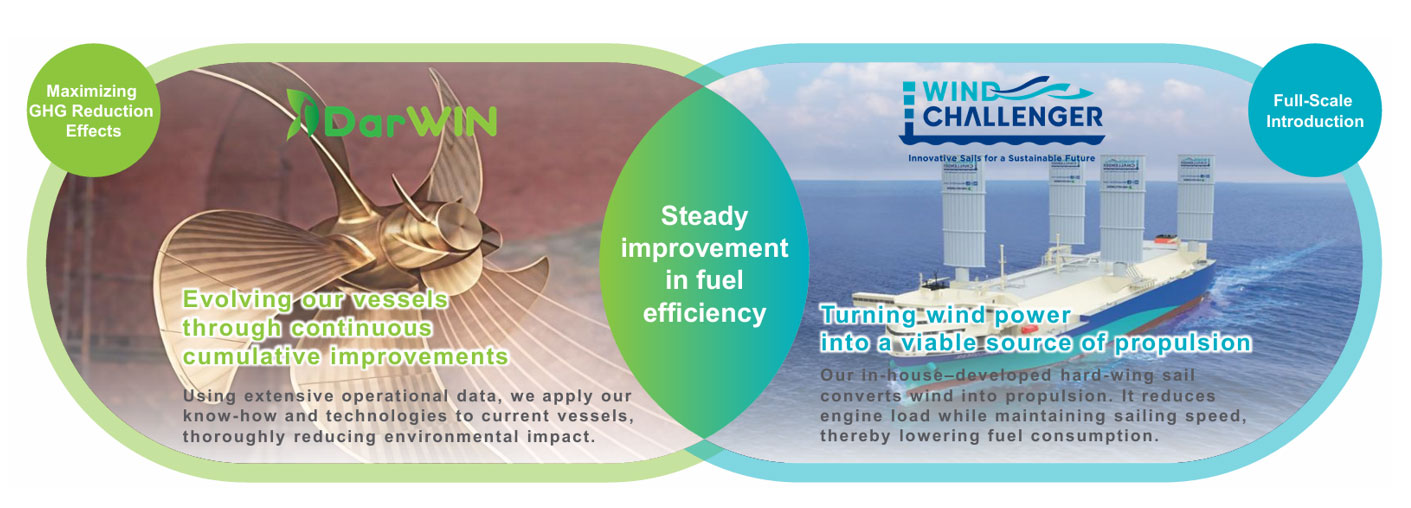
The MOL Group Environmental Vision was established to contribute to achieving net-zero GHG emissions by 2050 and realizing a sustainable ocean and global environment. By moving ahead with both the Wind Challenger, which harnesses wind power for vessel propulsion, and DarWIN, which drives further enhancements in operational efficiency, as two complementary pillars of its environmental strategy, the group seeks to improve fuel efficiency during voyages and reduce GHG emissions. Through MOL's participation in COP31 Japan Pavilion, we will showcase the MOL Group's technologies and initiatives which contribute to the decarbonization of shipping industries to domestic and international stakeholders, thereby helping to realize a sustainable society.
(Note 1) For details, please refer to MOL webpages below.
November 14, 2025:"BLUE ACTION 012 DarWIN Project Evolution is the Culmination of Small Improvements."
January 14, 2025:"DarWIN Project and EcoMOL -Building an Entirely New Data-Driven Efficient Operation Method-"
The MOL Group Sustainability Issues
MOL Group identifies "Sustainability Issues" (Materiality) as our key issues for sustainable growth with society through realization of the Group Vision.
We anticipate this initiative to contribute especially to the realization of "Environment" and "Digital Transformation."