- JP
- EN
June 04, 2026
MOL to Invest in the First Offshore LNG Liquefaction Facility in the United States
- Upstream LNG Value Chain Expansion -
Mitsui O.S.K. Lines, Ltd. (MOL; President & CEO: Jotaro Tamura; Headquarters: Minato-ku, Tokyo), together with Delfin Midstream, Inc., a group of investors led by Global Infrastructure Partners (GIP), a part of BlackRock, and Vitol has reached a Final Investment Decision (FID) and formally decided to participate as an investor in an offshore floating liquefied natural gas ("FLNG") project. Delfin FLNG 1 will be the first floating liquefaction facility in the United States and the largest FLNG project globally. This world-class FLNG project will have an annual LNG nameplate production capacity of 4.4 million tons and is expected to begin first production in 2030. The total project cost is approximately USD 5 billion, and the total equity contribution by investors is approximately USD 1.4 billion. MOL plans to invest approximately USD 300 million, representing approximately 23% of the total equity contribution. MOL will be the first Japanese shipping company to invest in an FLNG project.
MOL previously invested in Delfin Midstream, Inc. in 2023 (Note 1) and has since supported the company's FLNG project development while conducting a commercial evaluation of Delfin FLNG 1. As a result, all necessary conditions for project realization have been satisfied, leading to the FID.
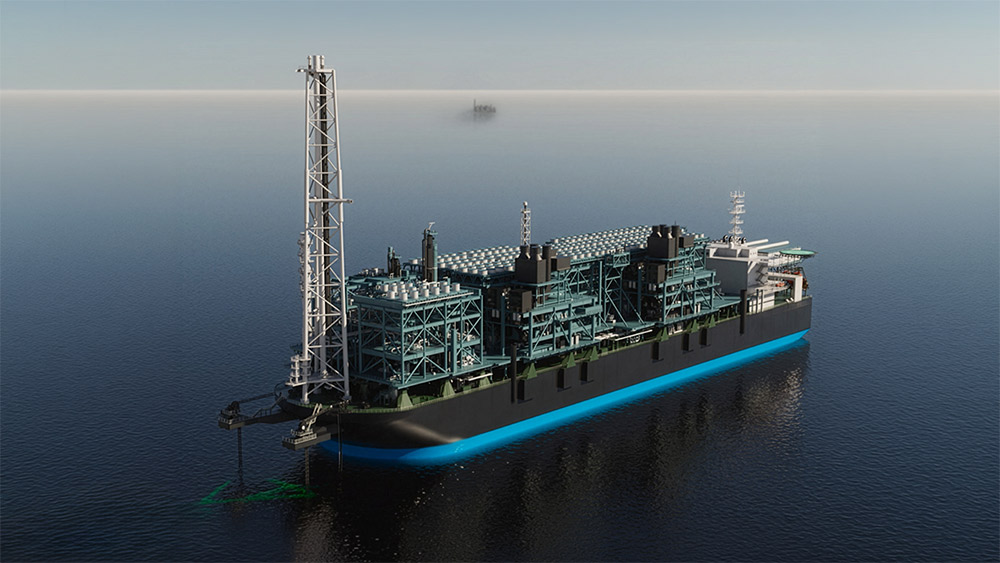
Delfin FLNG 1,has obtained all required permits and licenses to begin construction, and has concluded long-term LNG sales agreements with Vitol and Gunvor, two of the world's leading LNG trading companies; Centrica, a major U.K. energy company; Expand Energy, a major U.S. natural gas producer. At this FID, a construction contract for the FLNG unit will be executed with Samsung Heavy Industries Co., Ltd. and the project will move into the execution phase toward the commencement of commercial operations.
In addition to participating as an investor, MOL will support the project through its technical expertise in offshore floating facilities cultivated through projects such as Floating Storage and Regasification Units (FSRU) (Note 2), its operational and safety know-how in ship-to-ship cargo transfer operations, and its financial expertise.
Natural gas is most efficiently transported after being liquefied into LNG, reducing its volume to approximately 1/600 of its gaseous state. LNG is typically produced at onshore LNG liquefaction facilities and then transported by LNG carriers. FLNG facilities liquefy natural gas offshore and have the advantage of minimizing impacts on surrounding local communities compared to onshore facilities. They also enable flexible vessel operations by avoiding congested shipping channels. Furthermore, in the event of severe weather such as hurricanes, FLNG units can disconnect from their mooring systems and evacuate to safe waters, significantly reducing damage risks.
For Delfin FLNG 1, feed gas will be procured on the U.S. mainland and transported via existing pipelines to the liquefaction facility located approximately 40 miles offshore along the southern coast of Louisiana. The gas will be liquefied into LNG onboard the FLNG vessel and then loaded onto LNG carriers for delivery to buyers.
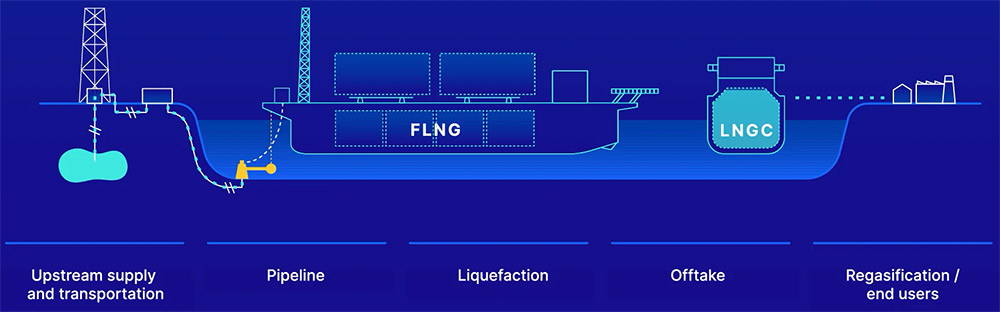
Leveraging the extensive expertise and know-how accumulated through operating the world's largest LNG fleet, MOL has expanded its business into the downstream segments of the LNG supply chain through assets such as FSRUs and power generation vessels. By participating in this FLNG project, MOL will advance its vertical expansion into upstream areas closer to LNG production, in addition to LNG transportation, receiving, and regasification. This will expand MOL's LNG business across the entire value chain. Through this project, MOL will evolve its business model to create value across the entire LNG supply chain, based on the expertise it has gained in LNG transportation, and will further contribute to the diversification, stability, and decarbonization of global energy supply.
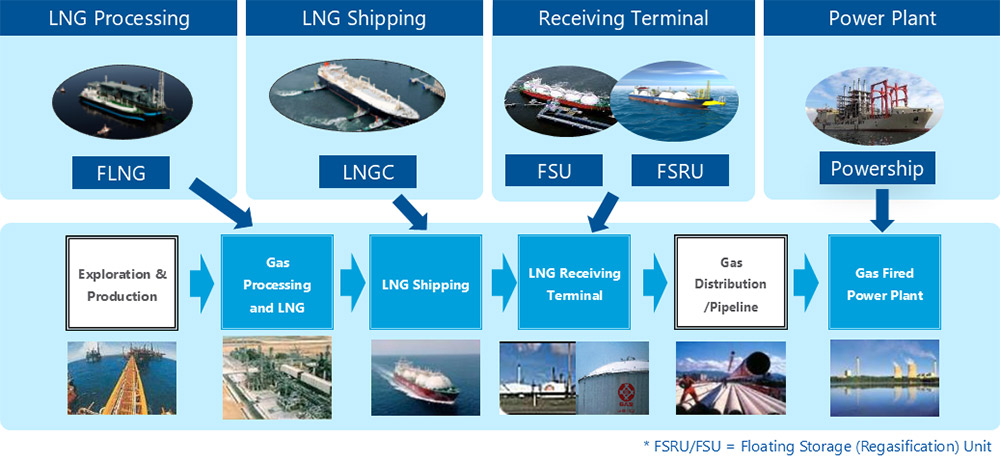
Through the experience and expertise it has cultivated to date, the MOL Group aims to grow into a global social infrastructure company that supports people's daily lives from the oceans, opens the door to a prosperous future, and delivers new value to all stakeholders.
(Note 1) For details, please refer to the June 9, 2023, press release:
Mitsui O.S.K. Lines Enters Strategic Investment Agreement with Delfin
(Note 2) FSRU stands for Floating Storage and Regasification Unit. FSRUs receive and store LNG offshore, regasifying it, and sending it to shore. They offer the advantages of lower costs and shorter startup periods compared to constructing storage tanks and regasification facilities onshore.
The MOL Group Sustainability Issues
MOL Group identifies "Sustainability Issues" (Materiality) as our key issues for sustainable growth with society through realization of the Group Vision.
We anticipate this initiative to contribute especially to the realization of "Environment", "Safety."