
- STATEMENT
- To the future,
with our
'Ocean Planet.'
BLUE ACTION 013
Microplastic
Collection Device
Collected waste yields
hints for the future.
Jun 10, 2026
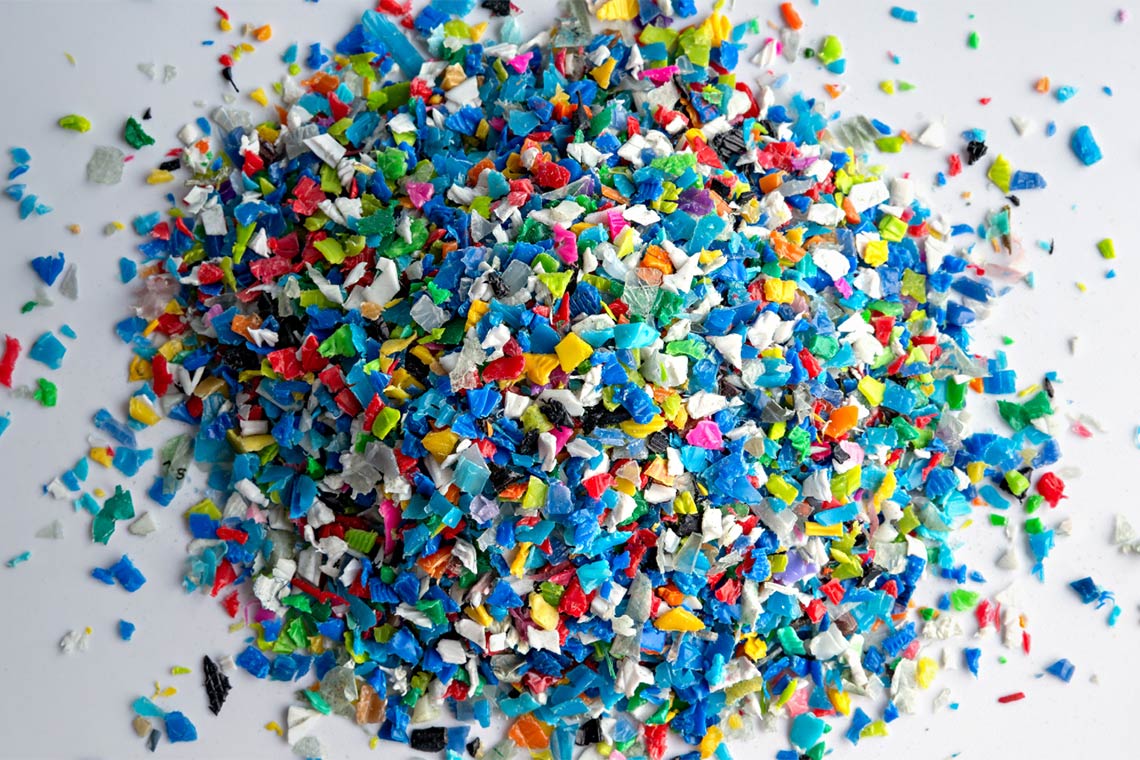
Since the advent of plastics in the early 20th century, marine pollution caused by plastic waste has become a global issue. Among the most severe types are microplastics, which are broken down into tiny pieces by ultraviolet rays and ocean waves. These tiny particles are less than 5 mm across, allowing them to spread widely throughout the ocean. This small size also makes them extremely difficult to recover with current methods. Since plastics do not break down in nature, they not only affect marine life, but may also eventually impact humans as well.
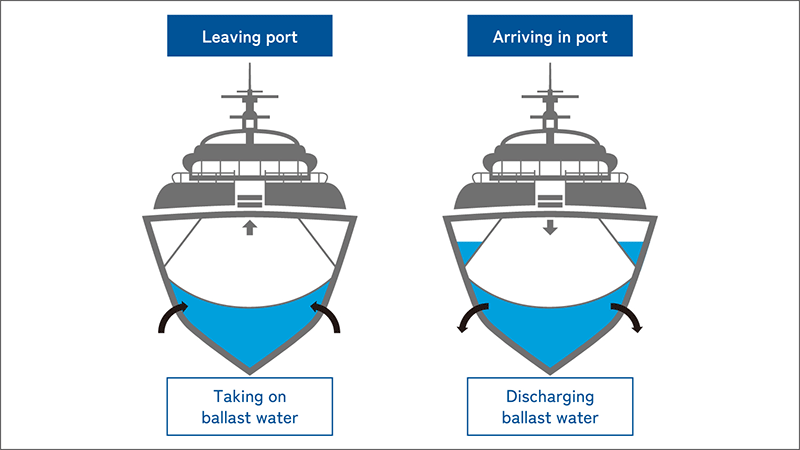
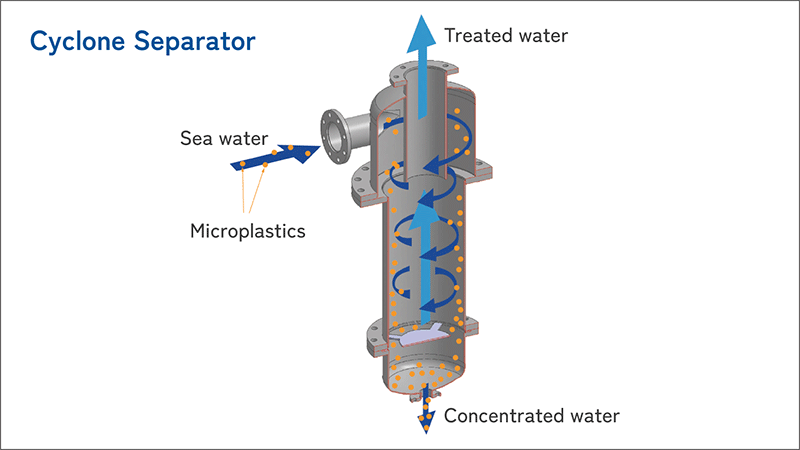
To address this difficult challenge, MOL partnered with other companies to develop a device that allows a ship to collect microplastics during a voyage. The first version of the device collected the waste from the ballast water* that a vessel carries, but since a ship can only take on ballast at certain times and places at sea, collection was limited. The device's second iteration pivoted to a new approach. It focused on, which a ship continuously takes in during a voyage to cool down engines and other equipment. By branching part of the intake line and equipping it with a cyclone separator that centrifugally separates microplastics from seawater, the system enables continuous collection during a voyage. Compared to the first design, this improved the volume of water treated each year by about 70 times.
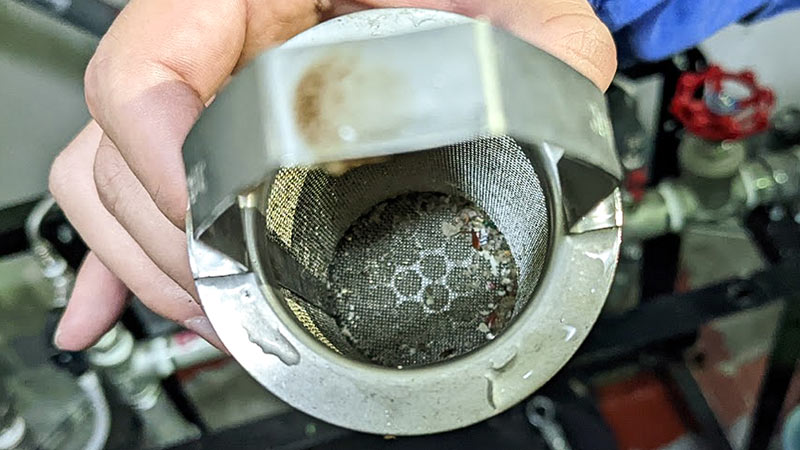
Of course, each ship can only collect a small quantity of microplastic. At the current treatment capacity, it would take an enormous amount of time to treat the Earth's total seawater volume of 1.338 billion km3. But this collection and treatment effort does not just yield waste. It also recovers data on where, when, what kinds, and how much microplastic is present. MOL provides that data to the Atlas of Ocean Microplastic (AOMI), the Ministry of the Environment's marine microplastic database. By using this resource, researchers, government bodies, and academic institutions around the world help to elucidate the actual state of microplastic pollution and develop methods to fight it. For example, we now know that the concentration of tiny microplastics drifting in the ocean has reached 1,000 to 10,000 particles per cubic meter of seawater. We have also started to understand the routes by which microplastics sink down to the ocean depths.
We believe that such findings will one day add up and reveal the key to solving the microplastics problem. Because we are a company involved with the sea, MOL is responsibility for that environment. And because we are a maritime shipping company, we can do something about it. The MOL Group will continue contributing to environmental conservation while closely monitoring the impact our business has on marine environments and biodiversity.
* Ballast water is taken into a ship's ballast tanks to maintain stability and proper draft (i.e., depth of the vessel below the water line) during a voyage. It is primarily taken in as seawater at a port when the ship is not carrying cargo, then discharged at another port or elsewhere as cargo is loaded.
Since the advent of plastics in the early 20th century, marine pollution caused by plastic waste has become a global issue. Among the most severe types are microplastics, which are broken down into tiny pieces by ultraviolet rays and ocean waves. These tiny particles are less than 5 mm across, allowing them to spread widely throughout the ocean. This small size also makes them extremely difficult to recover with current methods. Since plastics do not break down in nature, they not only affect marine life, but may also eventually impact humans as well.
To address this difficult challenge, MOL partnered with other companies to develop a device that allows a ship to collect microplastics during a voyage. The first version of the device collected the waste from the ballast water* that a vessel carries, but since a ship can only take on ballast at certain times and places at sea, collection was limited. The device's second iteration pivoted to a new approach. It focused on, which a ship continuously takes in during a voyage to cool down engines and other equipment. By branching part of the intake line and equipping it with a cyclone separator that centrifugally separates microplastics from seawater, the system enables continuous collection during a voyage. Compared to the first design, this improved the volume of water treated each year by about 70 times.
Of course, each ship can only collect a small quantity of microplastic. At the current treatment capacity, it would take an enormous amount of time to treat the Earth's total seawater volume of 1.338 billion km3. But this collection and treatment effort does not just yield waste. It also recovers data on where, when, what kinds, and how much microplastic is present. MOL provides that data to the Atlas of Ocean Microplastic (AOMI), the Ministry of the Environment's marine microplastic database. By using this resource, researchers, government bodies, and academic institutions around the world help to elucidate the actual state of microplastic pollution and develop methods to fight it. For example, we now know that the concentration of tiny microplastics drifting in the ocean has reached 1,000 to 10,000 particles per cubic meter of seawater. We have also started to understand the routes by which microplastics sink down to the ocean depths.
We believe that such findings will one day add up and reveal the key to solving the microplastics problem. Because we are a company involved with the sea, MOL is responsibility for that environment. And because we are a maritime shipping company, we can do something about it. The MOL Group will continue contributing to environmental conservation while closely monitoring the impact our business has on marine environments and biodiversity.
* Ballast water is taken into a ship's ballast tanks to maintain stability and proper draft (i.e., depth of the vessel below the water line) during a voyage. It is primarily taken in as seawater at a port when the ship is not carrying cargo, then discharged at another port or elsewhere as cargo is loaded.